

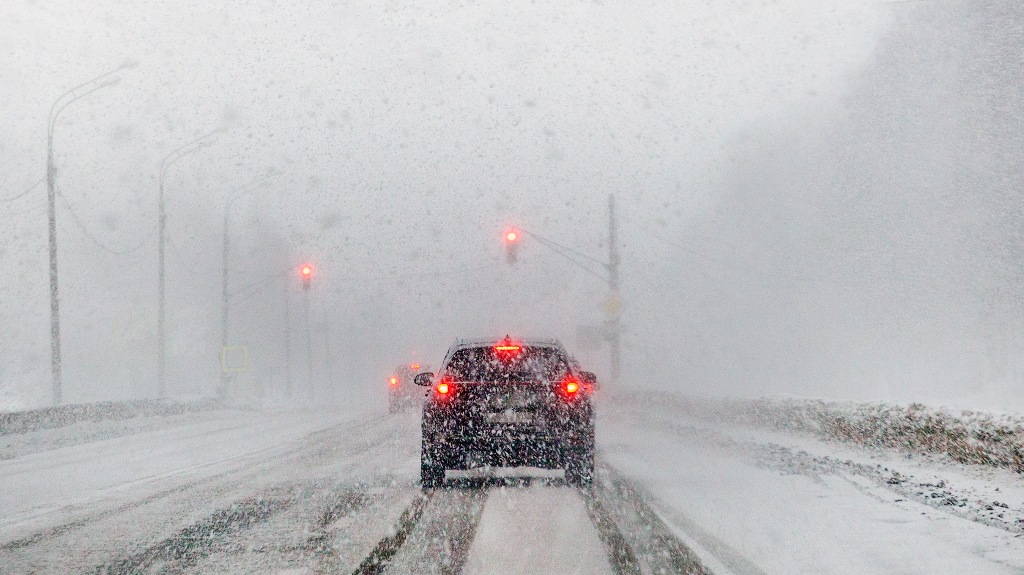
Chicago’s temperamental weather patterns can impact car accident liability, particularly during inclement weather conditions, such as snow and ice. Allocating fault for a winter weather car accident hinges on a driver’s ability to adapt to road and weather conditions. Illinois law requires drivers to modify their driving behaviors in accordance with the weather. Failing to do so can result in being held liable for any resulting collision. If you have questions about how weather conditions can play a role in your liability for a car accident, talk to an experienced Chicago car accident lawyer today.
How Ice, Snow, and Speed Can Contribute to Accident Liability
Snow and ice make roadways slippy, meaning your tires won’t grip the surface very well, if at all. If you drive too fast on icy roadways, your car can drift, spin out, or slide into other lanes. This can cause your vehicle to leave the roadway or to crash into oncoming traffic.
State law says that drivers are required to reduce their speed in inclement road and weather conditions. When icy conditions are present, safe driving involves smooth braking and acceleration and the avoidance of sudden maneuvers. Losing control of your vehicle on icy roadways is often a symptom of driving too fast for the current weather conditions.
When a winter-weather-related crash goes in front of a judge, he looks at whether or not the driver reduced their speed for the current driving conditions. If the driver failed to lower their speed on an icy road and, as a result, caused an accident, they could be found negligent and be held liable for any ensuing damages.
Braking distances are significantly increased on icy streets. Drivers who do not lower their speed and increase the amount of room between their vehicle and the vehicle in front of them can easily cause rear-end collisions. In these cases, the drivers can be held answerable for the accidents they cause. Failing to increase your following distance and reduce your speed in icy or snowy conditions can also lead to huge pileup accidents. Determining fault in a Chicago multi-vehicle accident on an icy roadway normally requires the knowledge of a Chicago car accident lawyer and the help of an accident reconstruction specialist. The more parties that are involved in your car accident lawsuit, the longer it is likely to take.
The Dangers of Rain-Slicked Roadways
For about 120 days every year, Chicago sees rain. The Federal Highway Administration says that more than 77% of weather-related crashes happen in rain or mist. In Cook County, rain can make driving much more dangerous. Water on the road makes the surface slippery, and when that water mixes with oil and dirt that have built up over time, the roads become even slicker. Slippy roads reduce how well your tires can grip the surface, which means it takes longer for your car to stop.
When it’s raining, drivers need to slow down and leave more space between cars. If someone tailgates or drives too fast on wet roadways, they can be considered negligent, making them liable for causing a rain-related car accident.
On wet roads, driving too fast can cause cars to hydroplane. Hydroplaning occurs when water gets between the tires and the road, causing the tires to lose their grip. When this happens, the driver can lose control, and their car can slide in any direction. Worn-out or old tires can also make a car more prone to hydroplaning. If a driver causes a crash while hydroplaning and their tires are not in good nick, they can be held liable for failing to take reasonable care in their vehicle maintenance.
Rain can make it harder to see other cars, hazards, and how far away things are. If a driver doesn’t slow down or doesn’t use their wipers and headlights the right way, they may be seen as negligent. This can affect who is blamed for a crash in rainy conditions.
How Is Negligence Proven in Winter-Weather Accidents?
Storm-related crashes can be hard to sort out. The driver who caused the crash might try to blame the victim instead. Insurance companies may also try to use the bad weather as an excuse to avoid paying for the accident. This is why it’s important to show that the other driver was careless.
Proving fault in a weather-related crash takes careful work, a full investigation, and the right evidence. This is why car accident lawyers are helpful. They look closely at what happened to find out who caused the crash and to show that the other driver was careless. A skilled Chicago car accident lawyer will check things like whether or not the other driver:
- Drove too fast for the weather
- Followed other cars too closely
- Didn’t use headlights, wipers, or defrosters
- Made sudden lane changes
- Ignored warning signs or weather alerts
- Drove a poorly maintained car

A Chicago car accident lawyer will gather strong evidence, like police accident reports, videos from traffic or security cameras, dash cam footage, weather reports from the day of the crash, and black box data from the vehicles involved. They may also talk to eyewitnesses who saw the weather, the road conditions, or how the other driver was behaving. If needed, the lawyer can bring in specialists who are able to recreate the accident and explain how the other driver failed to adjust to the adverse weather conditions.
Your attorney will look at all the evidence to show how the other driver failed to be careful and caused the crash. They will work to make sure the blame is placed on the driver who was negligent. Your lawyer will also talk with the insurance companies for you and handle all settlement discussions.
Call Fabbrini Law Group
Because weather-related crashes can be confusing, getting legal help is important. At Fabbrini Law Group, our Chicago car accident lawyers have more than 65 combined years of experience. We offer private consultations where we will review your situation and explain your options. Call us at (312) 494-3131 or fill out the contact form on our website to set up your consultation.
